


How to Evaluate a Software Engineering Partner Beyond Capabilities.
A practical framework for Tech Buyers to evaluate Software Engineering Partners beyond technical capabilities, including evidence, delivery model, governance and commercial fit.


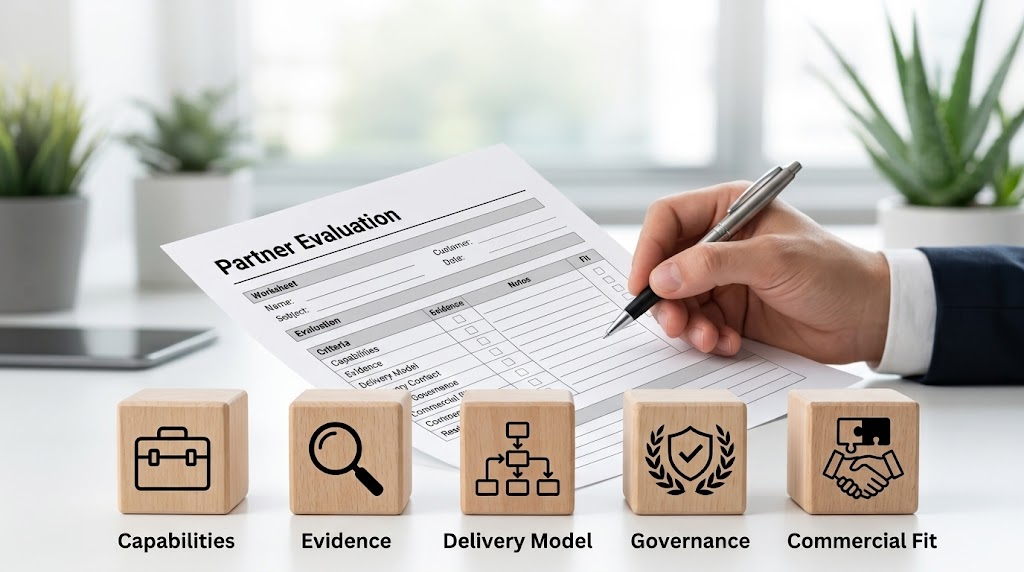
Capabilities matter when evaluating a Software Engineering Partner, but they are only one part of the decision. Tech Buyers also need to consider delivery evidence, collaboration model, governance, commercial context and the fit with the specific sourcing need.
Start with the sourcing need
A useful Partner evaluation starts before comparing companies. Tech Buyers should first clarify what they actually need: the business objective, required software engineering capabilities, technology context, expected delivery model, team setup, location or time-zone requirements, governance expectations and relevant commercial constraints. These criteria create the basis for deciding which Software Engineering Partners are genuinely suitable.
Assess capabilities in context
The relevant question is whether a Software Engineering Partner can apply the required software engineering capabilities in the context of the specific sourcing need. Technology experience, domain understanding, team composition, delivery approach and the ability to work within the required collaboration model can all affect the fit.
Separate claims from evidence
Not every signal provides the same kind of evidence. Company profiles describe how a Software Engineering Partner presents its capabilities and experience. Case Studies can provide evidence of delivered projects, while client testimonials provide experience signals from previous relationships. Certifications, technology partnerships and employee credentials add further context. Partner Insights can demonstrate expertise and problem understanding, but they should not be treated as proof that a Partner has successfully delivered a comparable project.
Evaluate the delivery and collaboration model
Two Software Engineering Partners with similar capabilities can still be very different choices. Tech Buyers should consider how the Partner proposes to work: project delivery, dedicated teams, team extension or another engagement model; local, nearshore, offshore or hybrid delivery; communication routines; decision paths; and the expected interaction between internal and external teams. The right model depends on the sourcing need, not on a single preferred delivery setup.
Consider governance and commercial fit
Governance and commercial conditions can materially influence whether a Partner relationship works in practice. Relevant questions include how responsibilities are divided, how progress and risks are managed, how changes are handled, which senior stakeholders remain involved and whether the commercial model supports the intended way of working. These factors should be assessed alongside technical and delivery capabilities rather than after the shortlist has already been decided.
Compare Software Engineering Partners consistently
A structured comparison helps Tech Buyers avoid making decisions based on whichever Partner presents most convincingly. The same core evaluation criteria should be applied across suitable Software Engineering Partners, while allowing additional criteria where a specific sourcing need requires them. This makes differences in capability fit, evidence, delivery model, governance and commercial context easier to identify and discuss.
Build an evidence-based shortlist
A shortlist should reflect the sourcing need and the strength of the available evidence, not simply the number of capabilities a Software Engineering Partner lists. Tech Buyers should look for a combination of relevant experience, credible delivery evidence, a suitable collaboration and delivery model, workable governance and appropriate commercial conditions. Where evidence is incomplete, that gap should be made explicit and validated during the next stage of the selection process.
Questions Tech Buyers often ask.
What should Tech Buyers evaluate beyond technical capabilities?
Tech Buyers should also consider delivery evidence, collaboration model, governance, commercial context, team setup and the fit with the specific sourcing need. A strong capability match does not automatically mean that the overall Partner setup is suitable.
How can Tech Buyers distinguish Partner claims from evidence?
Different information provides different signals. Company profiles describe Partner claims, Case Studies provide evidence of delivered projects, testimonials reflect client experience, and certifications or credentials add supporting context. Partner Insights can demonstrate expertise and problem understanding, but they are not proof of successful delivery.
Should every Software Engineering Partner be evaluated using the same criteria?
The same core criteria should be applied consistently so that suitable Software Engineering Partners can be compared meaningfully. Additional criteria can be added where the sourcing need, technology context, delivery model or risk profile requires them.
What should Tech Buyers validate before making a final Partner decision?
Before a final decision, Tech Buyers should validate important assumptions and evidence gaps. This may include relevant project experience, proposed team composition, delivery setup, governance responsibilities, commercial conditions and how the Partner would address the specific sourcing need.
A structured approach to Partner Selection.
Software Engineering Partner Selection works best when capabilities, evidence, delivery model and commercial context are evaluated against a clearly defined sourcing need. ValueLeap supports Tech Buyers in structuring this process and comparing suitable Software Engineering Partners.
Apply this insight to your sourcing decision.
Use the related guidance to translate this issue into relevant criteria, a sourcing model or a validation step for your specific context.
